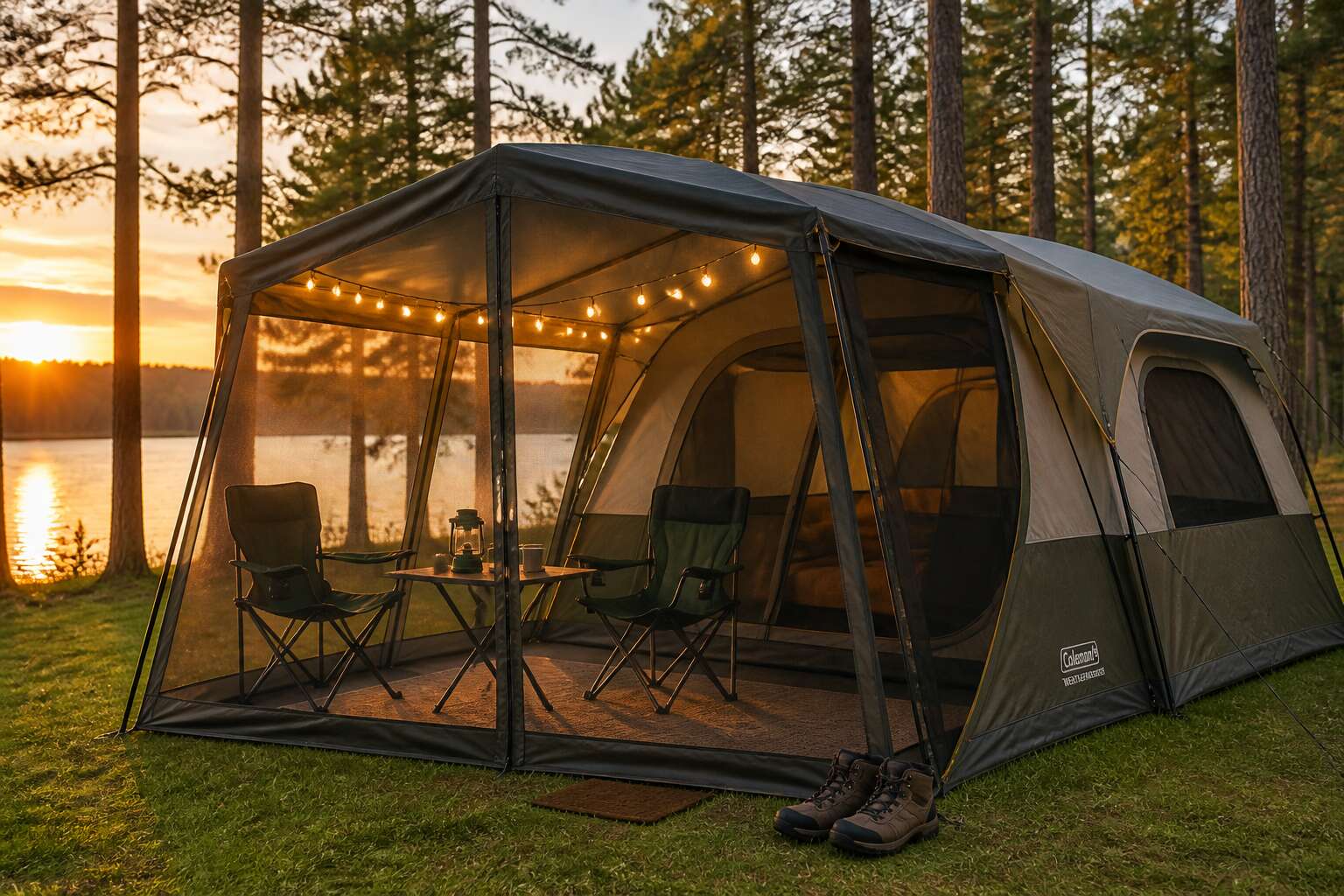
Evaluating the Perfect Screened Shelter
Material Durability and Weather Resistance
The Karoo sun does not negotiate, and neither does a sudden Highveld thunderstorm. The material of camping tents with screen porch deserves more thought than the number of view windows.
The hydrostatic head rating reveals the water pressure the fabric endures before leaking. 1500mm suits the mild Cape coast, but Mpumalanga’s summer rains warrant 3000mm or more. The floor’s denier rating matters too, as sharp stones and repeated rolling cause wear.
The difference lies here:
- Polyester resists UV degradation better than nylon, essential for our intense sun.
- Taped seams prevent water from entering through stitch holes.
- Aluminium poles bend under stress while fibreglass splinters.
The mesh deserves scrutiny. A tighter weave keeps out the midges of northern Botswana but reduces airflow, and the ventilation debate can outlast any argument about camping etiquette. For all the praise heaped on camping tents with screen porch, the mesh often fails first.
Interior Space and Sleeping Capacity
The average camping tents with screen porch sleeps three adults, provided one of them is a contortionist and the other two are on speaking terms. What the spec sheet calls a “queen bed orientation” typically translates to one person hugging the wall while the other performs a midnight ballet over the cooler. Interior space is measured in square meters, but the true unit of comfort is the elbow, and there are never enough to go around.
Before you trust the “sleeps six” claim, consider who those six are. A family of small children, sure. Six adult males from the rugby club, not a chance. The screened area itself often becomes the unintended storage dungeon for every muddy boot and damp towel you swore you would organise.
- Measure the floor length while lying down, not standing.
- Check if the ceiling peak is above your nose when seated.
- Count the doors, because midnight exits matter.
Eventually, you learn that a camping tents with screen porch gives you the luxury of being outdoors without the insects, but the interior still demands negotiation. That is the real capacity test.
Porch Size and Floor Layout
Camping tents with screen porch are a geometry lesson disguised as a holiday. The porch needs to hold your camp table, two folding chairs, and the cooler without forcing a constant game of musical furniture. The perfect screened shelter has its own proportions, independent of the sleeping area. You need depth to push your chair back without grazing mesh, and width to pass someone without a sideways shuffle.
Measure the floor layout before you commit:
- Stand inside the porch with the door closed. Raise both arms. If you can touch opposite walls, the space will feel tight.
- Walk from the entrance to the back wall in three natural strides. Fewer than three means the porch is purely decorative.
- Mark where the poles sit. A centre pole will ruin your table arrangement.
The best porches act like a veranda, not a corridor. The difference between a relaxed evening and a contortionist act.
Where a Bug-Proof Tent Shines
Family Camping in Insect-Heavy Terrain
In the Okavango Delta, insects are not a nuisance but a constant presence. For families camping in such terrain, camping tents with screen porch offer a clear advantage. The mesh enclosure creates a living area that stays breathable yet sealed. You can read, eat, and talk without wearing a head net. Children remain calm because the crawling and buzzing stays outside.
Consider what the porch holds back:
- Flies that gather around cooking surfaces
- Mosquitoes that arrive at dusk
- Moths that flutter toward any light
This separation allows the family to gather after dark, sharing the day’s stories as the sounds of the bush continue around them. The tent does not remove the wilderness. It defines a boundary between comfort and chaos.
Backyard Glamping and Day Trips
You don’t need to cross the Okavango to value a screened enclosure. A backyard glamping session, or a long day trip to the Kruger, presents its own demands. Camping tents with screen porch turn a short escape into a deliberate break. You can sleep with the fly open, listening to the wind, while the porch keeps the afternoon sun off your drinks.
The porch becomes the operations room for a lazy lunch. You don’t have to retreat inside every time a gust of wind kicks up dust across the veld.
- Keep your cooler off the ground under the shade.
- Set up a small table for cards without clearing the tent floor.
- Charge your phone using a power bank, sheltered from the elements.
It is a defined space that works for a quick overnight stop. These camping tents with screen porch give South Africans the separation they need from the ordinary.
Fishing and Hunting Base Camps
At 4 a.m. on the Orange River, the midges arrive before the fish do. A base camp without a screened enclosure leaves every task exposed to the swarm. Camping tents with screen porch give you a sealed space to sort tackle and strip wet waders without inviting the insects inside.
After a long day on the water, the porch becomes the staging area. Hang lures to dry, clean a catch away from your sleeping quarters, or field-dress a bird while the wind carries the scent off. The mesh keeps flies off the meat and your kit.
- Rodent-proof food storage on a raised table
- Dry boots and socks after a river crossing
- A clear surface for sharpening knives or repacking ammunition
For hunting camps, the visibility works both ways. You watch the clearing without exposing movement. The tent itself stays clean, and you sleep without coating everything in silt. That separation is what makes a base camp feel like home.
Group Events and Social Hangouts
When the sun drops over the Karoo, the social hour begins. Group campsites without a protected gathering space dissolve into separate tents, each person retreating from the mosquitoes. Camping tents with screen porch change this. The mesh enclosure becomes the common room, a place to share a meal without swatting insects from the food.
The porch invites lingering. A lantern on the table, the bushveld humming beyond the mesh. Conversations stretch late, with no reason to retreat indoors.
Practical details matter for hosting:
- A card table set for evening games without wind scattering the pieces
- A cooler at the porch edge so guests help themselves without tracking dirt inside
- A morning coffee station for early risers while others sleep
The screened porch is neither fully outside nor enclosed, letting people feel part of the landscape while protected from it. For a group, that shared space turns a camping trip into a gathering.
Setting Up and Tearing Down Efficiently
Choosing the Right Campsite Orientation
The sun in the Highveld is relentless. When I roll out my camping tents with screen porch on a slope, the angle of the ground dictates the entire night. I check the aspect before I stake. A tilt to the east brings morning heat; a westward tilt bakes the mesh. I read the prevailing wind. The screen porch catches gusts, and the poles will groan if I give them a broadside.
- Position the door facing the sunrise to catch the first light.
- Align the long side to the wind for stability.
- Clear a radius of rocks and ant hills.
When you tear down your camping tents with screen porch, never fold wet nylon. Detach the poles from the sleeves, sweep the floor, and let the porch air out. For speed, pack the pegs in a separate pouch. The screen zipper gets caught if you force it. Give it slack!
Stability Against Wind and Rain
Efficient setup starts with a dry run at home. I lay out all parts, match poles to seams, and tension the guylines before the wind arrives. Practicing with my camping tents with screen porch saves twenty minutes at the campsite.
For stability against rain, dig a shallow trench around the footprint. Angle it away from the door. In the Highveld, thunderstorms arrive without warning. Hammer pegs at forty-five degrees, double stake the windward side. The screen porch acts like a sail if left loose, so batten every flap.
- Peg the corners, then the midpoints.
- Cross the guylines over the ridge pole.
- Tighten the porch floor after each rain shower.
When tearing down, reverse the order. Release tension before removing pegs. Shake out debris, and let the mesh dry for ten minutes. A folded wet seam breeds mildew. My camping tents with screen porch pack smaller when I roll, never stuff.
Staking and Seam Sealing Best Practices
Efficient setup begins before you leave the garage. I unroll camping tents with screen porch on clean grass, snap every pole joint, and slide the ridge pole through its channel first. This order prevents the fabric from twisting. For staking, drive pegs at a forty-five degree angle, never straight down. The peg’s shoulder should catch the soil. Seam sealing is a separate task. I turn the fly inside out, brush the seams with a dry cloth, and apply sealant in one thin pass.
Tearing down requires the same discipline. Remove stakes, then loosen the guylines. Collapse poles from the middle outward. Roll the fabric tightly to expel air, never stuff it.
Seam sealing steps:
- Clean seams with a soft brush.
- Apply sealant in a thin coat.
- Let it cure for twenty-four hours.
After each trip, I inspect the battened edges and mesh corners. Camping tents with screen porch last longer when every detail gets attention.
Cleaning and Storing Your Screen-Equipped Tent
Ninety percent of tent damage happens at the edges of haste. A screen porch tent demands reverence for its mesh and zippers. When I set up camping tents with screen porch, I raise the main body before installing the poles, letting the fabric breathe. Tearing down reverses the order. I unzip every panel fully, brush away grit with a soft-bristled broom, and fold the mesh along its seams, never creasing it.
For storage, I keep the fly separate from the body. Moisture is the enemy. I dry every surface under shade, then roll the tent around its ridge pole. A loose roll prevents pressure marks. I store camping tents with screen porch in a cotton sack, not plastic, allowing airflow. Zippers get a light silicone spray every third trip. Rust on the poles is lifted with fine steel wool and wiped down.
Check the following before packing:
– groundsheet free of debris
– pegs wiped clean
– mesh corners free of spider eggs
– guylines untwisted
Cleanliness is preservation. A tent that closes without struggle opens the next season with glee.
Repairing Mesh and Zippers on the Trail
Forty minutes wrestling a pole sleeve teaches more than any manual. I now pitch camping tents with screen porch in fifteen! Stake the corners first, then raise the centre pole. This keeps the mesh off the ground. Tearing down reverses the order. Pull the windward pegs last, especially when the Cape southeaster arrives, so the fabric does not slap you.
On the trail, repairs are simpler than people think. Torn mesh and a sluggish zipper are the two afflictions. A needle, waxed thread, and scrap netting live in my repair tin. For a zipper, rub a candle stub along the teeth. Carry these:
- waxed thread and needle
- spare slider for the main door
- fabric glue for small tears
Cotton buds clean out the grit. A clean track and a patched corner keep any screen tent functional far from home.
Screened Tent vs. Pop-Up Canopy vs. Hammock Tarp
Ventilation and Condensation Control
Every camper wakes up once to a damp sleeping bag. Camping tents with screen porch handle condensation better than most because mesh panels create continuous airflow while keeping rain out. Pop-up canopies offer open ventilation but no control. They cannot trap heat or redirect breeze, so moisture just sits on your gear. Hammock tarps fall in between. They block precipitation, yet pitch one too low and your breath recirculates, dripping back on you before dawn.
Compare these ventilation features:
- Mesh wall coverage for cross breezes
- Roof vent placement for rising humidity
- Fly gap to prevent inner condensation
The screened tent’s semi-permeable walls provide a dry buffer that canopy users never experience. You sacrifice some open-air exposure, but in humid South African evenings, that trade keeps your sleeping bag dry.
Packed Size and Weight Trade-Offs
When you measure packed size, camping tents with screen porch ask for the most boot space. The poles, the mesh walls, and the extra floor for the porch roll into a bag that outweighs two hammock tarps with their straps. You trade that weight for a self-contained room.
A pop-up canopy offers a wide shadow, but its frame folds into a long, heavy case. It suits a vehicle basecamp, not a hike. The hammock tarp compresses to a loaf of bread, yet gives no floor, no walls, and no porch to shield gear.
- Screened tent: 6 to 9 kg, packed length near 60 cm
- Pop-up canopy: 12 to 15 kg, awkward rigid poles
- Hammock tarp: 1 to 2 kg, fits in a backpack side pocket
That weight difference decides how far you walk from the car at a South African reserve. The screened tent earns its bulk when you need a dry, bug-free space without carrying a separate shelter.
Best Choices for Solo vs. Family Camping
A solo camper in the Kalahari might find the hammock tarp sufficient for one night, but it leaves your boots exposed to dew and your pack to scavengers. The pop-up canopy suits a vehicle, yet its open sides offer no refuge from mosquitoes at dusk. For a family in the Lowveld, the camping tents with screen porch become the practical centre of camp. I have watched children nap without repellent on their faces while the porch held the cooler and camp chairs on a rainy afternoon.
Compare the three:
- Hammock tarp: one person, minimal weight, specific tree requirements
- Pop-up canopy: car camping, wide shade, no bug protection
- Screen-porch tent: two to six people, one setup, living area included
The real question is whether you camp alone with a backpack or with people who expect a dry place to sit.
Accessories That Transform a Screened Tent
Ground Tarps and Footprint Options
The ground beneath your tent determines how dry you sleep. For camping tents with screen porch, I always pair the shelter with a proper ground tarp. Polyethylene sheets are cheap, but they trap condensation. A breathable ripstop footprint lets moisture escape while shielding the floor from rocks and roots.
Think about the tarp’s reach beyond the tent walls. A small overhang stops splashing mud from staining the mesh. Stake it down loosely, leaving a few centimetres of slack. This simple step prevents pooling.
- Lightweight polyester for backpacking trips
- Heavy-duty PVC for rough terrain
- Custom-shaped footprints to match your exact porch layout
The right footprint does more than protect. It keeps the entire screen porch area dry and extends the life of your camping tents with screen porch. That’s a win!
Lighting and Power Management
According to the South African National Energy Development Institute, outdoor lighting accounts for a third of campsite energy use. That figure changes how I approach power management for camping tents with screen porch. The porch becomes the central space where batteries, solar panels, and lanterns gather each evening!
A portable LED lantern with a diffuser creates ambient light without attracting insects. String lights along the roof poles provide a softer glow. A headlamp hooked near the door aids navigation. Power sources range from folding solar panels to USB rechargeable power banks.
Common power arrangements:
- Folding solar panels attached to guylines
- USB rechargeable power banks with multiple ports
- Low-wattage inverters for small devices
Cable management through the mesh door depends on a simple Velcro strap. Routing the line along the zipper track prevents tripping hazards. Camping tents with screen porch function effectively when lighting and power systems are properly managed.
Furniture and Sleeping Systems
A screened tent becomes a living space when you add the right furniture. A folding camp chair with a side table holds your morning coffee. An inflatable mattress with a built-in pump transforms the sleeping area into a proper bed. For camping tents with screen porch, consider a cot to keep you off the ground and away from creeping things.
- Stackable storage crates for gear
- Collapsible washbasin for dishes
- Compact hammock chair for the porch
Sleeping systems matter as much as seating. A self-inflating sleeping pad paired with a lightweight blanket works in most seasons. Add a pillow that packs small. The porch becomes your staging area, holding shoes and bags so the inner tent stays clean. Choose furniture that folds flat to respect the footprint.
Privacy Panels and Wind Walls
South Africa’s Cape Doctor wind can hit 60 km/h without warning. I learned that lesson on the West Coast. A privacy panel turns a camping tent with screen porch into a sheltered retreat when that gust arrives. Panels clip onto the existing frame, blocking wind, dust, and prying eyes. They attach in minutes and fold into the same stuff sack as your tent walls.
Wind walls serve a different purpose. They deflect gusts while preserving the view. Place them on the prevailing wind side and leave the rest open for airflow. For camping tents with screen porch, this matters when afternoon thunderstorms roll across the Highveld.
Some campers add:
- Reflective panels that double as heat shields
- Mesh-backed wind walls for bug protection
- Tie-down loops to secure panels during high wind
The porch stays usable when the weather turns. That is the real transformation.
Guy Lines and Extra Stakes
Guy lines and extra stakes continue that transformation. For camping tents with screen porch, they lock the structure into place. I carry a handful of extra stakes to pin down the porch floor on uneven ground. One gust on the West Coast taught me that!
Reflective guy lines mark the tent’s edges after dark. They also let you adjust tension from the outside, which stops the screen from bulging inward. A taut line hitch works best for quick changes. You can attach a line to the porch peak and anchor it away from the tent, creating a stable angle that sheds rain.
With these accessories, the screened porch becomes a dependable outdoor room, ready for whatever the sky sends.
Storage Solutions for Gear and Food
Anyone who has camped in the Kruger knows the drill: a baboon can smell an unguarded apple from fifty metres. Storage matters more than comfort when choosing camping tents with screen porch. The porch keeps food and gear organised.
I use the mesh walls to my advantage. Food goes into sealed crates on a foldable table, while cooking fuel sits outside the sleeping zone. The screen keeps insects off the supplies, but it does not keep out a determined monkey.
For gear, the porch floor is valuable space. A muddy day pack stays at the entrance, away from clean clothing. Wet boots rest on a dedicated mat. Simple choices add order:
- Hanging organisers clipped to the inner roof
- Collapsible bins for kitchen utensils
- Smell-proof bags for perishables
Each item has a purpose. A camping tent with screen porch, packed this way, stays a usable room rather than a messy pile.
Seasonal Camping Strategies with a Mesh-Protected Tent
Spring and Summer Bug Management
Spring turns every damp hollow in the bushveld into a hatch site. That is why camping tents with screen porch earn their keep here. I seal the inner bedroom while the outer porch catches the breeze. The mesh blocks midges without trapping humidity. Summer brings heat that pushes you out of a closed fly, yet a mesh-protected tent keeps the zipped porch as your shield.
Seasonal positioning matters.
- In spring, angle the porch away from stagnant pools.
- In summer, set the opening upwind of the cooking area.
- Always enter through the screened vestibule, never the direct zip.
For serious bug management, camp inside a camping tents with screen porch and make the porch your staging zone. Strip off dusty gear, spray your ankles, then step inward. That ritual works! When the dusk chorus starts, the screen porch is the only sane place to sit.
Fall and Cool-Weather Comfort
Autumn turns the bushveld evening air sharp. Bugs fade, but chill creeps in. Camping tents with screen porch become a thermal buffer and bug barrier. I seal the inner bedroom and keep the porch mesh closed to hold radiant heat.
Cool weather demands different tactics. In fall, position the porch to catch the low sun. Use the vestibule as a windbreak. The mesh still filters occasional midges, and the enclosed space reduces drafts.
- Close the fly before dusk.
- Store blankets in the porch.
- Face the opening away from wind.
That rhythm keeps the sleep zone dry. When frost threatens, the porch absorbs the first cold, and the inner tent stays comfortable.
Winter Camping with a Screened Enclosure
Winter claims the Highveld with a blunt silence. The cold is a presence at the skin. In my camping tents with screen porch, I find a strange refuge. The mesh is not a barrier against insects now, but against the lunar wind. I keep the inner door sealed tight, letting the porch act as a frozen vestibule. The porch becomes a staging ground for the night.
- My boots, creaking with frost.
- My water bottle, turned to a solid block.
- My spare socks, as stiff as boards.
Every night, my breath condenses on the mesh and freezes into a film of ice. When the wind rises, the screen vibrates, humming with the force. I do not sleep well, but I sleep dry. The porch absorbs the first, brutal cold, and the inner tent remains a functional sanctuary.
Adapting to High-Altitude and Coastal Winds
The wind at the Cape does not ask permission. At 1,500 metres on the Drakensberg escarpment, it arrives with a dry, knife-edged insistence. On the coast, it carries salt and moisture. My camping tents with screen porch handle both, but only when I adjust the setup.
For high altitude, I pitch the porch as a windbreak. The mesh cuts the bite, yet lets the thin air move. For coastal gales, I angle the tent so the porch faces away from the sea. The screen filters the spray, not the view.
What I have learned:
- The porch zips taut to reduce flutter.
- Extra guy lines on the windward side change everything.
- A lower pitch angle keeps the whole tent calm.
The mesh flexes where a solid wall would strain. That flexibility is the strategy.


0 Comments