
Understanding Tent Categories
Expedition and Mountaineering Tents
At 6,000 metres, the wind can exceed 100 km/h and the temperature drops below negative forty. Expedition and mountaineering tents often rely on a geodesic pole frame, dividing the load evenly across the whole structure. This is the decisive engineering choice.
I always inspect the crossing point. A strong sleeve with a fitted base allows the frame to flex without breaking. When comparing the best camping tents in the world, that crossing outweighs the usable floor area.
- Additional pole stays at every junction
- Reinforced webbing at the corners
- A storm flap over the zipper
The mountaineering option removes extra mass, while the expedition category adds a thicker floor and a larger vestibule. The purpose stays the same; the frame is the load bearing core.
Family and Group Camping Tents
Backpacking and Ultralight Tents
The first rule of ultralight camping is simple: pack less, move faster, and feel the terrain underfoot. A backpacking tent trades the sprawling living space of a base camp for a shelter that lives on your back. The primary goal here is weight reduction, achieved with clever pole geometry and high-tenacity fabrics. When you start looking for the best camping tents in the world for a multi-day hike, your metric changes from square meters to grams. A tent that weighs 1.5 kilograms is a palace for a purist; anything under a kilogram is luxury for the obsessed. You sleep closer to the ground, but you wake up 20 kilometers further along the trail.
Choosing between these categories requires brutal honesty about your ambitions. A conventional backpacking tent typically offers more headroom and a double-wall construction to manage condensation. An ultralight shelter often uses trekking poles for support and a single layer of fabric, demanding more skill to pitch correctly in exposed conditions. For the South African landscape, where you might transition from the Cederberg’s dry rock to the Drakensberg’s wet slopes, you must decide on your priority.
– Weight ceiling: Aim for under 2 kg for a two-person model to save your spine on the long ascents.
– Material tolerance: Spinnaker nylon packs smaller but requires careful site selection to avoid punctures.
– Pitch time: Freestanding models allow you to move the tent to find level ground, essential for rocky Highveld campsites.
The trade-off is always between durability and speed. A heavier, ripstop polyester shell can shrug off a thunderstorm, while a gossamer ultralight fly will flutter violently without proper tension. Yet, for the solo hiker or the fast packer, the reduction in base weight is the defining feature of the best camping tents in the world. This class of shelter is not about comfort in camp; it is about efficiency in motion.
Key Features to Evaluate
Waterproofing and Weather Resistance
Picture this: the sky turns a bruised purple, and the wind begins to speak in low moans. The difference between a memorable night and a miserable one lies in a tent’s quiet defence. A 6000mm hydrostatic head rating on the bathtub floor isn’t just a number; it is a promise of a dry sleeping bag. The finest shelters resist water through a combination of seam-sealed seams, which are often taped at the factory, and ripstop nylon fabrics treated with a polyurethane coating. This layered approach is the first line of defence against Cape Town’s unforgiving squalls.
Outer flysheets, however, bear the true brunt of the storm. A proper rainfly should fully envelope the inner mesh, creating a generous vestibule. This gap prevents condensation from dripping onto your face and allows for crucial airflow. Look closely at how the guylines attach, as reinforced webbing at stress points is vital. Consider the following enhancements that separate the robust from the merely adequate:
– Quality YKK zippers with storm flaps
– Adjustable vents at the top of the fly for breathability
– Pole sleeves that reduce pressure on the fabric
Ultimately, the best camping tents in the world employ hydraulically tested seams and aluminium poles that flex with the gusts rather than snap against them. A tent that remains taut and stable through a downpour, its flysheet drumming with the rhythm of rain, is worth its weight in gold. You crawl inside, exclaiming with relief as the world outside hisses and spits. That dry, secure bolt-hole is precisely the sanctuary you were promised.
Weight and Packability
The backpack’s capacity is finite, and every centimetre of packed tent steals from food and water. Weight dictates distance; pack size dictates freedom. The best camping tents in the world strip weight with high-tenacity nylon and carbon fibre. But numbers deceive. A 2kg tent that compresses to a loaf of bread differs vastly from one that swallows half your pack. Interior volume often inflates as packed volume shrinks.
Four factors define portability:
- Trail weight with stakes and guylines.
- Packed length for backpack strapping.
- Compression ability from fabric stiffness.
- Load splitting for multiple carriers.
South African trails, from the Cederberg to the Drakensberg, punish excess. The best camping tents in the world pass this trial when they ride high on the back. The true test is not the showroom scale but the third day of walking, when shoulders ache.
Interior Space and Layout
Interior space is where the marketing department’s dreams collide with your elbows. The top performers allocate volume with quiet ruthlessness: vertical walls around the shoulders, a floor that accommodates a restless six-footer, and a vestibule that swallows a muddy pack without complaint. A lofty peak means nothing when the sleeping end narrows to a cramped trough.
Three layout details matter most:
- Door placement: twin entrances mean the 2am bladder emergency does not become a wrestling match.
- Catch-all pockets: headlamp, glasses, and emergency chocolate stay exactly where you left them.
- Floor pitch: a footprint that keeps your head uphill on a Cederberg slope.
The best camping tents in the world make interior volume a non-issue. You stop comparing square metres and start noticing whether your partner’s elbows remain on their side of the tent. That is the true metric.
Setup and Ease of Assembly
Poles that require a degree in origami are a dealbreaker. When you are fighting the Cape Doctor on a beach campsite, the best camping tents in the world reveal themselves through simplicity. Colour coded poles and clips beat sleeves every time. You want a structure that rises in minutes, not a puzzle that has you squinting at diagrams by headlamp.
I prefer tents where the inner pitches first or all in one. Either way, the fly should attach without acrobatics. A guy rope system that actually holds in gusty Karoo wind matters more than a fancy brand stamp.
Consider these setup features:
– Daisy chain webbing that lets you adjust tension without retying knots.
– Steel or aluminium pegs that survive rocky Free State ground.
– A footprint that clips in place so sand stays out.
A good tent makes setup boring. That is the point.
Durability and Material Quality
Nothing exposes a flimsy tent faster than a Lowveld summer thunderstorm. The best camping tents in the world use ripstop nylon or polyester with a denier rating that resists thorns and rocky ground. Fabric weight and thread count tell you more than any brand story.
Inspect seams before you trust them. Factory taped seams outperform tube sealant every time. Zips with chunky pulls survive Cederberg sand, while delicate sliders fail after one weekend. Weigh these markers of quality:
- Poles rated at 7000-series aluminium that flex without splintering.
- Coatings with at least 3000mm hydrostatic head.
Canvas tents endure years of Karoo sun but need a roof rack and strong arms. Choose fabric for the ground you actually camp on.
Top Picks for Extreme Conditions
High-Altitude Expedition Tents
At 7,000 meters, a tent is a lifeline. The best camping tents in the world for high-altitude expeditions are engineered for one thing: survival. They must resist winds that flatten houses and stay flexible in temperatures that crack plastic.
I have seen tents fail at altitude. The difference is in the details. Aerodynamic profiles, reinforced pole sleeves, and breathable inner layers that reduce frost buildup. Condensation at -30°C becomes ice, and ice kills!
- Geodesic or hybrid geodesic frames
- High-tenacity nylon with silicone coatings
- Mitten-friendly vent closures
These tents are not for casual camping. They are for summits. That is why they rank among the best camping tents in the world.
Storm-Ready Four-Season Shelters
When the barometer plummets, most tents shake apart. A true four-season shelter does the opposite. It holds firm! The best camping tents in the world use a low profile to shed wind instead of catching it. I have ridden out whiteouts in tents that barely shuddered. The difference lies in the frame and how the fly attaches. Tension points matter. A flapping fly will fatigue fabric and seams within hours.
- Pre-bent aluminum poles offer instant headroom without sacrificing aerodynamics.
- Vestibules zip shut against horizontal rain and spindrift.
- Reinforced guy-out points sit at every stress corner.
Taped seams and waterproof zippers are essential. A fly that reaches the ground prevents spindrift from sneaking in. These shelters weigh more than three-season models. That weight is the price of staying dry and intact. For anyone chasing the best camping tents in the world, storm-readiness is the true test.
Desert and Hot Climate Tents
Under a Namibian sun, the thermometer inside a sealed tent can pass 50°C before breakfast. The best camping tents in the world for desert camps meet that heat with breathable mesh and radiant barrier linings. Sand is the subtler enemy. Zippers clog, poles grind, and fine dust finds every seam.
Consider what separates a tolerable shelter from a heat trap:
- Double-wall construction that lets hot air escape through roof vents
- Full-length awnings that create shaded living space beyond the sleeping area
- Tall peaks so heat collects above your head instead of on your face
I have watched two tents side by side, same brand, same price, and one stayed cool while the other baked. The difference was material colour and vent placement. Hot-climate shelters prioritise airflow over storm bulk. They weigh less, pack smaller, and sacrifice none of the night sky.
Winter Camping Tents
Winter tests a tent in ways summer never will. The cold creeps through the floor, the wind finds every weakness, and condensation turns the interior into an icebox by dawn. In the Drakensberg or the Cederberg, a mediocre shelter becomes a liability. The very best camping tents in the world for extreme winter conditions share a few non-negotiable traits.
They use thicker fabrics, usually a 75D or heavier ripstop polyester, to resist abrasion from ice and wind. They feature aerodynamic profiles that shed gusts rather than catch them. And they rely on a robust pole structure, often DAC aluminium, to hold firm when the weather turns hostile.
– A sealed bathtub floor to keep meltwater from seeping into your sleeping bag
– Adjustable snow flaps that lock the tent down when you stake them out
– Dual-zone ventilation so you can manage condensation without freezing in the process
The real test is how a tent handles the night shift. A winter tent must trap warmth from your body without creating a dripping, damp interior. That balance requires careful engineering. Vents placed high and low create a chimney effect, drawing moisture out while retaining heat. The best camping tents in the world achieve this with a two-layer approach, a breathable inner and a waterproof outer that work together in sub-zero temperatures.
I have spent nights where the mercury dropped to minus five and the wind howled like a wounded animal. A proper winter tent makes that experience tolerable. It gives you a dry, stable refuge. It keeps the storm outside where it belongs. That is the standard you should demand when the forecast threatens snow.
Best Tents for Family Camping
Spacious Cabin Tents
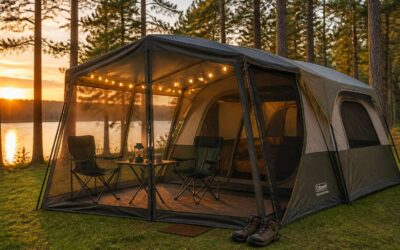
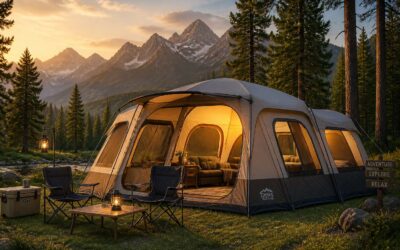
There is a peculiar silence in a well-made cabin tent, the kind that lets a family breathe after a long day on the road. For those seeking the best camping tents in the world, the spacious cabin tent remains a steadfast choice. Its near-vertical walls transform cramped quarters into a proper room, while integrated dividers carve out private alcoves for restless children. The ceiling height alone can change the entire mood of a campsite.
Consider what makes these shelters different from their leaner cousins:
- A full-height interior allows standing and dressing without contortion.
- Multiple doors reduce the midnight traffic jams.
- Oversized windows admit natural light without extra effort.
The floor space accommodates cots, duffels, and the occasional board game. In the Karoo or along the Garden Route, a cabin tent offers reliable shelter. That is why these designs earn their place among the best camping tents in the world.
Multi-Room Family Tents
A family of four loses roughly 20 minutes every evening to sleeping arrangements. Multi-room family tents solve this by dividing the interior into actual rooms, not just visual screens. The result is a layout where parents can talk while children sleep, and morning risers do not wake everyone else!
- Dedicated sleeping zones reduce movement noise.
- Central living space keeps dirty boots away from bedding.
- Multiple exits mean one person can leave without unzipping every flap.
In South Africa, where bushveld nights carry distant sounds, this separation matters. A well-designed multi-room structure raises the best camping tents in the world to a standard of real comfort.
Pop-Up and Instant Tents
Pop-up tents unfold from their carrying cases with one decisive motion! They save time after a long drive, though their collapsed form turns into a disk that is difficult to strap onto a roof rack.
Instant tents use pre-bent poles that lock into place, offering faster setup than traditional models while keeping a conventional shape. Their packed size suits vehicles with limited boot space. Consider these factors:
- Packability versus setup speed
- Storage space in your vehicle
- Frequency of use per season
Both types demand gentle handling during packing to prevent joint damage. In South Africa’s variable weather, I have found these tents work for short trips where speed matters more than stability. The best camping tents in the world are not always the most robust; they are the ones that meet your specific needs at the right moment.
Budget-Friendly Family Options
Family camping in South Africa often begins with a spreadsheet. The best camping tents in the world rarely come cheap, but affordability does not demand poor quality. I have watched parents face this trade-off at campsites from the Cederberg to the Garden Route.
The anxiety is quiet until the tent fails. Then it is loud! A budget tent that fails on the second night costs more than the money you saved. So I look for value where it matters most: sleeping space per rand spent, simpler pole structures, and fewer frills. Weight matters less when you drive to your site.
Here is what I check before buying:
- Price per sleeping space across the tent’s expected lifespan
- Availability of replacement poles and pegs
- Warranty length and the manufacturer’s local presence
The best camping tents in the world, for a family on a budget, are the ones that still feel like a good purchase on the tenth trip.
Large Group Tents
When ten people share one shelter, the tent shapes the entire dynamic of the trip. Large group tents must balance private sleeping cells against a common gathering floor. I have seen this tested at family reunions along the Wild Coast. The best camping tents in the world for large groups use segmented pole systems, multiple doorways, and zoned partitions to keep different sleeping rhythms from colliding.
Ventilation is the hidden engineering challenge. Ten warm bodies inside a sealed nylon shell produce condensation before dawn. High airflow panels, mesh ceilings, and adjustable vents separate a dry morning from a soggy one. A large group tent also needs broader guy-line anchors and reinforced seams, because wind load multiplies with surface area. I prefer designs where the flysheet extends into a covered porch for boots and backpacks. These practical choices define the best camping tents in the world when the group grows beyond a single family.
Screen Rooms and Add-Ons
When the tent itself becomes a base camp, the right add-ons expand its function. Screen rooms and annexes are overlooked components of family camping, especially under the South African sun where insects and afternoon thunderstorms can be relentless. A dedicated screen room offers enclosed space for dining, napping, or quiet reading without dragging dust into the sleeping quarters. Some of the best camping tents in the world allow you to zip on a customizable porch or awning, creating a shaded transition zone between outdoors and interior.
Consider options like:
- Attached vestibules for gear storage.
- Freestanding screen rooms that connect via sleeve or clamp.
- Ground sheets with overlapping lips to keep rain out.
These components weigh little and pack flat, yet they double the usable area. For families, that means less conflict over floor space and more time spent actually camping, not maintaining the tent. The connection point bears stress, making compatible zippers and reinforced corners essential durability factors. A well-chosen add-on elevates a good tent into something memorable.
Ultralight and Backpacking Tents
Sub-2-Pound Tents
When you’re counting every gram on your back, a heavy shelter becomes a burden before the trail even begins. That is why the best camping tents in the world for serious hikers often tip the scales at under two pounds. These minimalist shelters use advanced materials like silpoly and Dyneema composites to shed weight without sacrificing structural integrity. The result is a space that protects you from wind and rain while allowing you to move faster and farther with less fatigue.
Choosing the right ultralight model requires a careful look at how you plan to use it. A trekking pole tent is ideal for those already carrying hiking poles, while a freestanding option offers convenience on rocky terrain where stakes won’t hold. Here are the key features that separate a great ultralight tent from a frustrating one:
– Single-wall construction for reduced weight, though it requires careful ventilation to manage condensation.
– Taped seams and bathtub floors to keep moisture out during Cape Town downpours or Drakensberg storms.
– Compact packed size that fits horizontally inside a backpack, making gear organisation simpler.
For solo adventurers heading into the Cederberg or along the Wild Coast, these featherweight options offer the freedom to set up camp wherever the day takes you. They are not for luxury, but for the pure efficiency of moving through the landscape, which is precisely why they rank among the best camping tents in the world.
Trekking Pole Tents
Trekking pole tents eliminate the dedicated pole set. Your hiking poles become the structural skeleton, cutting weight. On the Drakensberg’s exposed ridges, this design offers stability that surprises users. The tent pitches taut, shedding wind.
I and many experienced hikers rank these shelters among the best camping tents in the world for solo and duo adventures. But they require skill. Staking out a trekking pole tent on a windy Cape Town beach demands precision. The geometry must be exact, or the fabric flaps.
Consider these points before buying:
- Adjustable pole attachments allow you to adapt to uneven ground.
- A fly that extends close to the ground blocks spindrift and rain splash.
- Separate inner mesh and fly layers manage condensation in humid conditions.
These tents are not for everyone! They reward careful setup. For those who master them, the payoff is a shelter that disappears from your pack, leaving only the trail.
Solo vs. Two-Person Ultralight Tents
The decision between a solo shelter and a two person ultralight tent often hinges on a gram of force versus a meter of comfort. For the solo trekker traversing the Cederberg, the weight savings are profound. A two person model adds nearly a kilogram, but it offers the luxury of spreading gear beside you. This extra space becomes critical during the damp weather of the Garden Route, where condensation is a constant enemy.
The psychology of space alters the choice as well. A cramped solo shelter can feel like a coffin during a storm, whereas a two person tent provides room to sit up and cook. However, sharing a two person tent demands a specific level of intimacy with your partner. It is a test of compatibility. The packing dimensions also vary, forcing a heavier burden upon one person unless you split the components.
Here is a breakdown of the key differences:
– Solo tents typically weigh around 900 grams and offer a narrow profile.
– Two person tents start near 1.4 kilograms.
– Floor space increases by roughly 50 percent in the larger model.
– Vestibules are often deeper on two person tents for storage.
This tradeoff defines the modern selection. When seeking the best camping tents in the world, you must match the shelter to the specific demands of your route. The solitary hiker on the Drakensberg trails prioritizes weight above all. The couple exploring the Wild Coast might value the evening comfort. Your decision rests on whether you carry the extra fabric or endure the close quarters.
Specialty and Innovative Tents
Glamping Tents
A statistic surfaced this year suggesting that forty percent of seasonal campers now seek accommodation that borders on the ethereal, and for them, the best camping tents in the world have evolved into mobile sanctuaries. These structures defy the old definitions, dissolving the line between the raw outdoors and curated comfort. Imagine a canvas palace with a brass bed, solid timber floors, and a porch that faces a private lagoon. This is where the wilderness whispers, but you sleep on percale sheets.
The allure lies in the deliberate contradiction of rugged capability and refined detail. These tents offer:
– A fully insulated double layer, controlling the interior climate.
– A supported internal frame, ensuring stability against coastal gusts.
– An attached, private ablution area with a heated shower.
– Large, clear vinyl or mesh panels for immersive views.
The true magic appears when a storm front rolls across the Karoo, and you remain dry, warm, and entirely comfortable. You listen to the rain on the heavy cotton canvas, a sound like distant applause. It is a level of resilience that guarantees your leisure is never compromised. This is camping stripped of its toil, leaving only the sensory warmth of the fire outside and the security of a four poster bed inside.
Rooftop Tents
A quiet revolution is taking place on the roofs of 4x4s across Southern Africa. Ten years ago, the rooftop tent was a cumbersome box of canvas and fibreglass, a compromise for the overlander who valued elevation over comfort. That era has passed. The current generation of these mobile shelters has refined the concept to a sharp point, offering a platform that turns any parking spot into a private observatory.
The evolution is found in the materials and the execution. The heavy, unwieldy designs of the past have given way to streamlined shells made of aerospace-grade aluminium and ripstop canvas. These are not merely tents; they are the best camping tents in the world for those who measure time in motion, not in set-up minutes. Consider what is now standard on a decent unit:
1. A cold-foam mattress, often up to 100mm thick, set on a slatted or honeycomb base.
2. A gas-strut assisted opening mechanism that raises the roof in under a minute.
3. Reinforced anodised aluminium telescopic ladders with anti-slip treads.
4. A mounting system that sits flush with your vehicle’s rails.
There is a particular savour in sleeping above the scrub and granite that defines the South African bushveld. The air is cleaner, and the sounds of the night, the rustle and the distant calls, carry a sharper clarity when you are suspended three feet above the earth. This configuration removes the dread of wet ground and the endless search for level soil. A vehicle’s chassis provides a stability that no ground pegging kit can match, a solidity that transforms a windy evening on the Skeleton Coast into a mere rocking of the shell, a lullaby of tensile strength and engineering.
Inflatable Tents
Airbeams have displaced the pole for a reason. An inflatable tent rises from its stuff sack in ninety seconds, no fumbling with sleeves or fragile alloy segments. The structure uses high-pressure air cells that flex in gusting Cape winds. For overlanders chasing the best camping tents in the world, this design warrants attention.
These systems absorb wind and rain instead of standing against them. A deflated rib folds into a sack smaller than a sleeping bag. The trade-off is weight, but the payoff is resilience.
- Integrated pressure relief valves prevent overinflation in heat.
- Replacement air chambers can be swapped without tools.
I have watched a photojournalist inflate her shelter beside a Land Cruiser in the Makgadikgadi and sleep soundly through a dust storm. That is innovation measured in minutes and PSI.
Convertible and Modular Tents
Convertible and modular tents turn fixed geometry into a choice. A single chassis accepts a mesh inner for tropical nights or a solid cocoon for winter gales. You reconfigure the shelter, not replace it. The best camping tents in the world increasingly offer this adaptability. I have unzipped a half dome and attached a second sleeping cell in less time than it takes to brew coffee. Modularity means you carry only what the trip demands.
- Inner tents for different seasons
- Awnings that clip onto existing poles
- Extension vestibules for gear storage
Each interface adds space or protection without a second shelter. That is smart design.

0 Comments