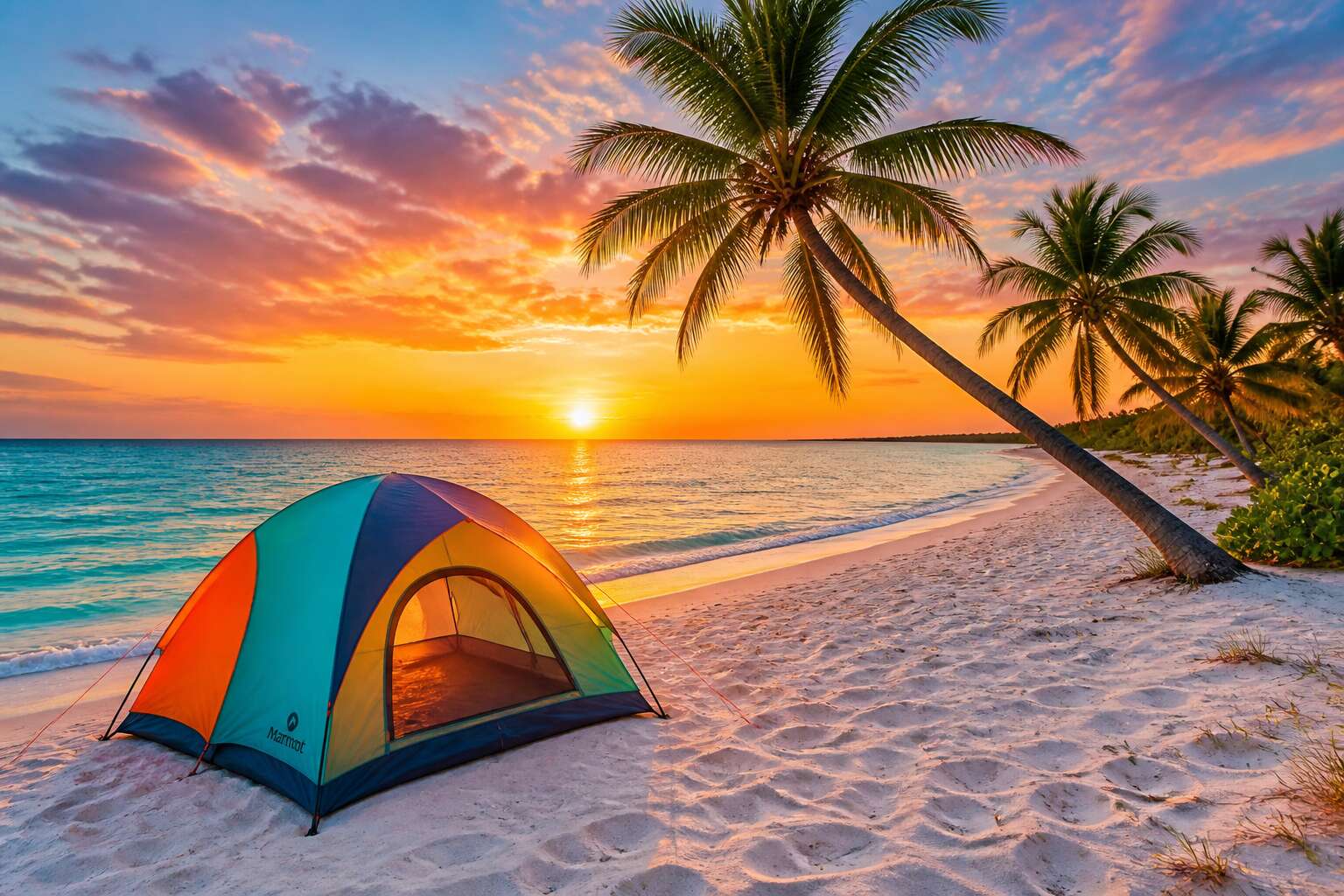
Selecting the Ideal Beach Campsite in the Sunshine State
Public Gulf Coast Campgrounds with Direct Dune Access
Wind direction shifts without warning along the Gulf Coast, so your campsite’s position relative to the dunes is a matter of survival. For tent camping on the beach in Florida, direct dune access grants incredible views and morning swims, but it also invites constant exposure. Choose a site tucked behind a secondary dune if you want shelter from overnight gusts.
Before you stake your tent at a public Gulf Coast campground, inspect the sand’s compaction. Loose sugar sand gives way under stakes, while packed sand near the wrack line holds firm. I’ve lost stakes to both extremes, which is why this inspection determines whether tent camping on the beach in Florida ends in rest or frustration. Consider these points:
- Locate the high tide mark from the previous night.
- Confirm your site sits above the vegetated berm.
- Check for fire ant mounds in dry dune grass.
Tent-Friendly Spots Along the Atlantic Shoreline
A single night on the Atlantic shore can leave you salt-crusted and weightless, or it can leave you chasing your tent across the dunes at 3 a.m. The eastern coast of Florida offers a different rhythm than the Gulf. Here, the wave action is more direct, and the tide tables demand a sharper eye. Your success with tent camping on the beach in florida depends on reading the beach’s subtle contours.
The Atlantic shoreline is often firmer than its western counterpart, but that firmness can be a trap. After a storm, the sand compacts into a hardpan that refuses stakes. You need to wiggle your peg into the soil manually before committing. I have learned this the hard way, hammering a stake only to watch it bend against an unseen shell layer. One particular morning, I woke to find my tent sprinkled with coarse sand, the remnants of a night where the wind shifted for no discernible reason.
When you scout a stretch of coastline from Cape Canaveral down to Fort Lauderdale, focus on the areas where sea oats give way to open beach. A site nestled between two low scrub mounds offers a natural windbreak. The key is to avoid the deep troughs that collect cold air at night. Standing water from a passing squall will pool in these depressions.
Here is a checklist I use to assess the ground before unpacking:
– Feel for a crust on the sand surface; a hard top layer often means good support.
– Look for scattered coquina shells, a sign of stable, well-drained soil.
– Check the distance to the nearest vegetation line, aiming for roughly 20 meters.
– Identify the direction of the prevailing breeze by licking your finger and holding it up.
The experience is filled with small negotiations. You trade the warm, tranquil water of the Gulf for the energetic, powerful surf of the Atlantic. There is a particular joy in falling asleep to the roar of breakers, but it demands a more careful approach. The real trick is to pitch your tent facing the ocean, letting the airflow move through the mesh, then seal the rainfly tight to trap your body heat as the temperature drops after sunset. It is a profound feeling, being this close to the raw power of the sea, but it requires you to be humble and prepared for the shifting moods of the coastline.
Island Camping in the Florida Keys
The Florida Keys rewrite the rules for tent camping on the beach in florida. Here, the Atlantic meets the Gulf in a shallow, sun-warmed mixing bowl. The ocean floor drops off slowly, so the surf lacks the brute force of the eastern shore. This creates a quieter environment, but the tide swings are dramatic. Water that was knee-deep at noon can be a hundred meters away by evening.
Selecting a site among the islands demands a different ground truth. The limestone bedrock sits close to the surface, often just beneath a thin skin of sand. You cannot rely on a deep stake for stability. Instead, you hunt for pockets of accumulated sediment, often found behind a cluster of mangroves. These pockets hold moisture, which allows the sand to pack tightly around your tent pegs.
– Look for a dark stain on the sand, indicating recent tidal coverage and a firm base.
– Inspect the area for exposed coral rock; a flat, porous surface can serve as an anchor point for guy lines.
– Confirm the site lies above the high tide wrack line, marked by dried seaweed and debris.
The soundscape is the true reward. The gentle lap of water against the shallows replaces the roar of breakers. You wake to the rustle of palm fronds and the cry of ospreys. The humidity holds the heat, so you can sleep with the tent fly open, trusting the trade winds to carry away the mosquitoes. This is a slower, more contemplative form of camping. The preparation is less about wind and waves, and more about understanding the island’s intimate relationship with the moon’s pull. The real skill lies in reading the subtle watermarks on the sand to find that perfect, temporary home.
Reserving a Spot vs. First-Come, First-Served Sites
The ideal beach campsite is rarely an accident. It is a negotiation between your schedule and the state’s booking systems. Some of the most coveted spots open for reservation eleven months in advance. Here is the twist: the best ones are often gone within minutes.
For those who prefer certainty, the reservation route demands strategy. You must move when the digital gates open. Consider the logistics before you commit to this path:
1. Set an alarm for the exact moment reservations are released. Florida’s popular parks follow strict schedules.
2. Book the full duration on day one. Adding nights later is nearly impossible during peak season.
3. Know your arrival window. Many sites require check-in by a specific hour or release your hold.
But there is another way. The first come, first served sites are a different beast. These are the primitive pockets, the walk-up spots, the ones that do not appear on any website. Securing one is a game of early mornings and sharp eyes. You watch for campsites that empty out at dawn. You hover near the ranger station, waiting for a cancellation. When you find one, you claim it with your tent pegs before noon.
This method suits a particular kind of camper. The one who treats the search as part of the adventure. The uncertainty is the price you pay for a location that no booking system can guarantee. The pivotal moment arrives when you must choose between a guaranteed spot and the possibility of something better. That choice determines the character of your entire tent camping on the beach in florida excursion. The true test is not your gear, but your patience and preparation.
Essential Gear Durable Enough for Sandy, Windy Shores
Wind-Resistant Tent Designs for Coastal Gusts
The Atlantic trades off the Florida coast can turn a calm evening into a 30-knot gale in under an hour, so your shelter needs more than a pretty view. Pack anchors that bite deep into sugar-fine sand, and a footprint that shrugs off moisture wicking up from below. I learned this the hard way on a Key West sandbar, watching a neighbour’s dome tent cartwheel toward the surf like a startled bird.
For tent camping on the beach in florida, consider a geodesic frame with crossing poles that flex rather than snap. Coastal gusts demand low profiles, and you want a rainfly that extends all the way to the ground. Nylon ripstop with a silicone coating handles the abrasive grit better than polyester, and stakes should be long, sand-rated aluminium shepherds hooks rather than flimsy wire.
Good coastal gear shares a few distinct marks:
– An aerodynamic shape that sheds wind instead of catching it.
– Sealed seams that resist salt spray and nightly dew.
– Vents you can close fully from inside when the wind shifts.
The strongest designs let you collapse the entire structure without folding sand into the joints, and they hold firm when the tide of wind rises. That quiet resilience is what separates a restful night from a long one spent chasing loose guylines.
Sand Anchors, Pole Vents, and Heavy-Duty Stakes
The first time I tried tent camping on the beach in Florida, I watched a perfectly good shelter tumble down the dunes because I trusted standard tent pegs. That mistake taught me more about coastal gear than any manual ever could.
Sand anchors are non-negotiable. Traditional stakes slip through dry sugar sand as if it were water, leaving your fly flapping and your poles swaying by midnight.
– Long aluminum shepherds hooks that reach forty centimetres or more.
– Sand screws that twist deep and hold firm.
– Deadman anchors, like a buried bag or driftwood, for the heaviest gusts.
Pole vents deserve equal attention. On humid nights when the Gulf breeze dies, you need airflow without inviting a storm inside. Look for vents you can cinch shut from your sleeping bag, because the weather shifts fast on these shores. Heavy-duty stakes complete the setup, but pair them with a broad footprint that prevents sand from working its way into zippers and joints. The right kit means you wake up rested, not exhausted from a night of chasing loose guylines.
Condensation Control and Quick-Dry Bedding
Condensation turns a dry tent into a wet one faster than any rainstorm. The moisture from your breath collects on the fly, then works onto your sleeping bag by 3 a.m. This is the unspoken challenge of tent camping on the beach in florida, and it demands bedding that dries quickly.
Synthetic insulation outperforms down when humidity sits near ninety percent. It wicks moisture, dries in an hour of Gulf sun, and keeps you warm even when damp. I pair a high-loft synthetic bag with a vented foot box and keep my body off the tent walls. A quick-dry sleeping pad liner stops sweat from soaking the foam beneath you.
The beach air carries salt that stiffens cotton and leaves it clammy. Nylon and polyester fabrics resist that grit. Ripstop shells and mesh storage pockets allow constant airflow around your gear while you sleep.
Understanding Florida Tides, Weather, and Camping Rules
Riding Out Summer Storms and High Tide Schedules
Florida’s tidal rhythms demand respect from anyone attempting tent camping on the beach in florida. The Gulf Coast experiences two high tide cycles daily, yet their timing shifts roughly fifty minutes each day. Summer storms can amplify these tides dangerously, flooding sandbars and cutting off exits. Understanding the local tide chart before pitching your shelter is non-negotiable.
The weather in Florida moves in patterns. Afternoon thunderstorms arrive with little warning, carrying wind gusts that flatten careless setups. State and county camping rules exist to protect visitors and nesting shorebirds alike. Many municipalities restrict how close tents may sit to the dune line.
- Check the tide schedule for the entire duration of your stay.
- Watch for storm advisories, not just rain forecasts.
- Respect posted markers for wildlife protection zones.
High tide can swallow a beach completely, forcing a midnight relocation. Experienced campers always load a dry bag with essentials for a swift move. Planning tent camping on the beach in florida means respecting these natural cycles.
Fire Restrictions and Proper Sand Fire Ring Setup
Florida’s coastal counties publish fire regulations with surprising ferocity. A tent camping on the beach in florida trip can lead to a citation if you assume open flames are permitted. Some municipalities require permits, while others ban fires entirely from March to October to protect nesting sea turtles. Practicing tent camping on the beach in florida means heeding these codes.
A proper sand fire ring begins with digging down to mineral sand, eight inches deep. Organic matter left in the pit smolders long after you douse the flames. Wet sand or stones arranged loosely hold the fire without blocking oxygen. The depth matters more than the visible structure. Shallow rings transfer heat to buried debris, cracking glass and igniting driftwood. Fires must remain below the high tide line, where waves reclaim the ash. Respecting these rules keeps the shoreline open for everyone.
Park Entry Passes, Quiet Hours, and Noise Ordinances
Florida tides move with a quiet authority, changing campsite access twice daily. Checking a tide chart before pitching a tent is non-negotiable. The high water line shifts, and the spot that felt dry at noon may be damp sand by 9 p.m. For tent camping on the beach in florida, this matters more than wind direction.
Weather adds another layer. Summer thunderstorms arrive without warning, and winter fronts turn balmy afternoons into 10 degree nights. Park entry passes are separate from camping fees, and many parks require them at the gate. Some counties offer:
- Daily admission passes for single day trips
- Annual passes for repeat visitors
- Senior discounts with proper identification
Quiet hours typically run from 10 p.m. to 7 a.m. Enforcing noise limits is left to rangers who have heard every excuse.
Sea Turtle Nesting Regulations You Must Follow
Sea turtles nest on Florida shores from March through October. During these months, tent camping on the beach in florida requires extra awareness. Lights disorient hatchlings, so flashlights and lanterns must stay red or off entirely after dark.
Rangers mark nests with stakes and tape. Do not move the markers and do not walk through marked zones. Flash photography, beach bonfires, and digging deep holes all pose threats. Some parks close sections of sand at night.
- Keep distance from nesting turtles
- Fill in sandcastles and holes before sunset
- Remove beach furniture at night
These regulations carry fines. The rules exist because loggerheads, greens, and leatherbacks return to these exact beaches. Respecting them keeps the campsite open for everyone.
Leave No Trace Rules for Coastal Dunes
Twice a day, the tide retreats and reveals the hard-packed sand you will call home. Those waters return roughly six hours later, and a tent pitched below the wrack line will be standing in saltwater by morning. Read the tide chart, not the sky, because Florida weather changes faster than either.
Afternoon thunderstorms arrive like clockwork in summer, and the sun on white sand demands respect. Pitch low, stake deep, and let the sea breeze do the cooling. The dunes are another matter.
Dune vegetation holds the shoreline together. One footstep through sea oats can start a blowout that erases meters of beach. Leave No Trace here means:
- Use only marked dune crossings
- Camp seaward of the dune line
- Pack out every scrap, including sand anchors and broken zipper pulls
Tent camping on the beach in florida is a negotiation between tide, heat, and grass underfoot. Honor all three, and the beach stays wild for the next camper.
Handling Local Wildlife Encounters at the Coast
Raccoon-Proof Food Storage and Smart Sanitization
Raccoons along Florida’s coast possess a dexterity that humbles any camper. They open zippers, unclip buckles, and remember the exact spot where you buried your trash. Tent camping on the beach in florida demands an honest assessment of your food storage system before dusk settles.
- Use locking containers with carabiner clips
- Hang food bags from a palm at least ten feet up
- Wipe down tables with diluted vinegar after meals
Smart sanitization means scrubbing every surface that touched raw seafood or marinade. Scent travels farther than you think, and a single forgotten wrapper undoes your precautions. The raccoon does not hate you. It simply remembers where the easy meal appeared last night, and it will return with patience you cannot match.
Coping with Mosquitoes, No-See-Ums, and Biting Flies
Mosquitoes along the Florida coast gather in the humid spaces between dunes and sea grape. No-see-ums arrive earlier, small enough to pass through standard mesh, and their bites leave a lasting itch. For tent camping on the beach in florida, learn to read the wind. A steady breeze keeps biting flies low and offers a respite.
Your camp setup affects exposure. Pitch the tent where the breeze reaches your sleeping area, not behind a dense shrub line. Wear light colored clothing that covers wrists and ankles after sunset. Keep repellent close to the tent door, not buried in a bag.
- Treat the mesh with permethrin before your trip.
- Use picaridin on exposed skin, reapplied after swimming.
- Set a small battery fan near the table to disturb biting flies.
The coast at night holds many small predators. They track your breath and body heat. Understand their patterns and you can sleep.
Keeping Your Distance from Shorebirds and Nesting Terns
Handling Local Wildlife Encounters at the Coast: Keeping Your Distance from Shorebirds and Nesting Terns
Florida’s coastline hosts nesting colonies of least terns, black skimmers, and snowy plovers. Their nests are shallow scrapes in the sand, nearly invisible. During tent camping on the beach in florida, a walk too close can force a tern to flush from its eggs. The eggs overheat within minutes.
Recognize the warning signs. Terns circling and calling sharply are not performing. They are signaling a threat. A low swoop aims to drive you away, not strike. I once saw campers laugh at a diving tern and step closer. The colony lost chicks that afternoon.
The colony defines its boundary. Thirty meters is the accepted buffer:
- Keep dogs from nesting zones.
- Walk below the high tide line.
- Use binoculars from the tent door.
One careless step can erase hundreds of chicks. The wind carries your scent to them before you see their nests. Respect the sand. Your tent camping on the beach in florida depends on sharing the shore without claiming it.
Making the Most of Your Caribbean-Style Tent Retreat
Best Sunrise and Sunset Viewing Spots from Your Tent
The first light on Florida’s Gulf Coast arrives without warning. I have watched it from a tent flap more than once. For tent camping on the beach in Florida, the eastern dune line near St. Joseph Peninsula offers the clearest sunrise view, unbroken by condos or palms.
Sunset calls for a different angle. Western-facing stretches of Sanibel Island or Fort De Soto’s beaches put the sky directly in front of you. For tent camping on the beach in Florida, position the tent so the zippered door faces the horizon. When the sun drops, you sit up and watch.
- The horizon haze thickens in August, muting the colour gradient
- Winter months bring the sharpest, most vivid sunsets across the gulf
The trade winds push salt spray low over the sand, and the stillness feels deliberate, almost otherworldly. That single hour makes it all worth it!
Fishing, Kayaking, and Paddleboarding Within Walking Distance
There is a specific rhythm to a day spent tent camping on the beach in Florida. The water is not just a backdrop; it is the main attraction, and the best part is that you do not need a car to reach it. Your camp chair becomes a front-row seat to a dynamic environment where the tide dictates the schedule.
Mornings are for the kayak. As the sun climbs, the water often turns glassy, perfect for a quiet paddle along the shore. You can glide over seagrass beds and spot rays skimming the sandy bottom. The trick is to launch early, before the afternoon winds pick up and turn the surface choppy.
- Pack a surf rod with a simple fish finder rig for the troughs just beyond the breakers.
- Keep a paddleboard on the sand, ready for a quick session when the wind dies down.
- Wear water shoes; the shelly areas near the passes can be sharp.
When the tide pushes in, the fishing improves. Pompano and whiting often cruise the shorebreak, and a cast from your beachfront campsite can reach them. The experience of tent camping on the beach in florida is defined by this direct access. You can wade out with a rod, or simply watch the pelicans dive for baitfish.
By mid-afternoon, the paddleboard comes out again. It is a simple way to explore the mouths of tidal creeks or just get a different view of your camp. This is the uncomplicated appeal of it all: the gear is close, the water is closer, and the day unfolds at the pace you set.
Exploring Nearby Coastal Towns and Fresh Seafood Shacks
The best part of tent camping on the beach in florida might be the moments you wander inland. Small coastal towns are often a short drive from the campground. Their streets carry a working waterfront energy that makes an afternoon escape feel worthwhile.
Fresh seafood shacks cluster near the marinas, serving what the boats brought in that morning. Smoked fish dip, grilled grouper sandwiches, and stone crab claws are standard fare. Plastic tables and paper napkins are the norm. No one is dressing up.
Consider these stops:
– Look for the daily catch board near the register
– Ask locals which shack has the freshest shrimp
– Bring a small cooler so your fish makes it back to camp
Showers, Bathrooms, and Amenities to Look For
After a day of salt spray and sand, a decent shower becomes the true luxury of tent camping on the beach in florida. I once paid extra for a site just because its bathhouse had warm water and a hook for my towel.
When scouting amenities, inspect the basics before you pitch:
- Foot rinses near the dunes
- Privacy locks on stall doors
- Drainage that doesn’t flood
You don’t need resort fixtures, just reliable ones. The Caribbean-style retreat feeling comes from open-air showers or cool tiled floors. Check if the water pressure holds and if the lights stay on past dusk. Small details matter more than fancy design!
How to Film and Photograph Your Seashore Camping Trip
Early morning on a Florida shoreline feels like a private Caribbean island. Tent camping on the beach in florida rewards those who wake before the sun, when the air is cool and the sand holds no footprints. I bring a small mirrorless camera and shoot from the tent opening.
For seashore footage, move slowly. Zoom with your feet, not your lens. Let the waves fill the frame and the sea oats sway.
- Wipe your lens every ten minutes!
- Shoot during the blue hour
- Keep your phone in a waterproof pouch
The salt spray is your only enemy. Protect every port and seam. I once lost a memory card to a rogue wave, so now I store backups in a sealed jar. That gritty evidence of tent camping on the beach in florida makes the footage worth it.
Booking the Ultimate Weekend or Week-Long Beach Camping Itinerary
Spending a week under canvas on a Gulf Coast sandbar feels like a slow exhale. The first morning, I skip the itinerary entirely. I make coffee, watch pelicans patrol the shoreline, and let the tide set the tempo. By day two, I have found the rhythm that makes tent camping on the beach in florida feel effortless.
- Morning: paddle before the wind picks up
- Midday: shade, a paperback, a long nap
- Late afternoon: swim, fish, gather driftwood
- Evening: cook, watch the horizon, sleep with the windows open
For a weekend, keep it simple. For a full week, book two neighbouring sites and rotate your view. Pack one extra day of food and one extra gallon of water. The weather can shift overnight, and the best days leave room for improvisation.


0 Comments